
Last Updated on May 5, 2026 5:03 pm by INDIAN AWAAZ
Zakir Hossain from Dhaka
Bangladesh foreign minister Khalilur Rahman has said Dhaka looks forward to a mutually beneficial and forward-looking relationship with India, even as he warned that the government would take necessary steps if any “push-in” incidents occur along the Bangladesh-India border.
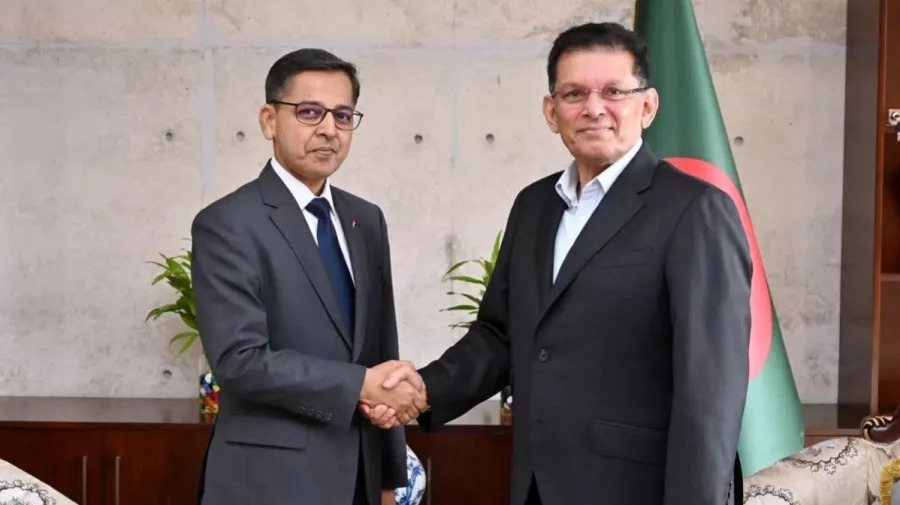
Khalilur made the remarks on Monday when outgoing Indian high commissioner to Bangladesh Pranay Verma paid a farewell call on him at the foreign ministry. The minister congratulated Verma on completing his tenure in Dhaka, while the envoy thanked Bangladesh for its cooperation and reaffirmed India’s commitment to strengthening ties. Khalilur wished him success in his future endeavours.
Speaking to reporters at state guest house Padma on Tuesday, Khalilur said Dhaka would respond appropriately if push-in incidents took place, particularly in the context of political changes in India’s West Bengal.
He also said Bangladesh expected progress from India on the Teesta water-sharing agreement and would continue talks with China on its proposed Teesta master plan as part of broader efforts to address the issue.
Meanwhile, BNP standing committee member Gayeshwar Chandra Roy said Bangladesh-India relations would remain unchanged regardless of which party comes to power in India.
Speaking after paying tribute at the graves of former president Ziaur Rahman and former prime minister Khaleda Zia at Zia Udyan in Dhaka, Gayeshwar said it was not important which party assumed power in India. “We believe in independence and sovereignty; therefore, regardless of who comes to power, relations will remain the same,” he said, congratulating Indian voters for choosing their representatives.
He added that Bangladesh does not comment on the internal affairs of other countries and prioritises the interests of its own people.
Gayeshwar said the current government had taken office amid multiple challenges but expressed hope that these would be overcome and stability restored. He said the government must work to fulfil public expectations and give greater emphasis to women’s leadership.
“There is no longer a one-party system where anything can be done at will,” he said, adding that the opposition’s role would remain important in governance.