
Last Updated on October 13, 2026 11:06 pm by INDIAN AWAAZ
Zakir Hossain, Dhaka
Bangladesh’s security agencies are investigating a suspected new militant outfit, “Ittehadul Ummah”, allegedly planning to establish a caliphate in the country. Authorities are also examining possible links with international terror networks as concerns grow over extremist activities.
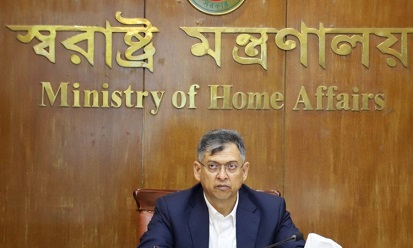
Home minister Salahuddin Ahmed confirmed that information about the suspected organisation emerged following the detention of 23 people from a mosque at Tejgaon College in Dhaka on September 18.
“Through forensic analysis of the mobile phones of the individuals taken into custody in Tejgaon and their subsequent interrogation, we obtained information about plans to form an organization named ‘Ittihadul Ummah.’ They are accused of organizing extremist activities aimed at establishing a Caliphate,” he said.
Of the 23 detained, investigators found suspected extremist links involving 12, while the remaining 11 were released after no significant evidence was found against them. The 12 were remanded for further questioning.
“We have a zero-tolerance policy against such extremist activities,” the home minister said.
Police detained the suspects during an alleged secret meeting after Friday prayers, acting on intelligence inputs. Officers from the Anti-Terrorism Unit (ATU) and Counter Terrorism and Transnational Crime (CTTC) unit joined the investigation.
The development comes amid heightened security concerns following warnings by the United Nations about attempts by Al-Qaeda in the Indian Subcontinent (AQIS) to establish covert networks in Bangladesh.
On September 19, three buses were set on fire in Dhaka’s Mirpur and Badda areas, while a pickup truck was torched in South Keraniganj. Several crude bomb explosions were also reported across the capital, with further incidents on September 20.
The attacks sparked fears of renewed instability. However, investigators have not established any connection between the incidents and the suspected new militant group. Allegations of political involvement and attempts to destabilise the BNP-led government also remain unproven.
Prime Minister Tarique Rahman’s government has pledged strict action against militancy.
Earlier, Prime Minister’s Information Adviser Zahed Ur Rahman acknowledged the presence of extremist elements, saying, “Militants exist in the country, and the government will work to bring militant activities down to zero.”
Security concerns have also intensified over militants who escaped during Bangladesh’s July 2024 uprising.
Inspector General of Prisons Brigadier General Syed Motaher Hossain said 690 of the 2,247 prisoners who escaped from jails during the unrest remained at large as of August 18.
Nine escapees were accused in militancy-related cases. Six had been rearrested, while three remained at large. At Narsingdi District Jail alone, 826 prisoners escaped, with authorities lacking records of 166 of them.
There are concerns that fugitive extremists could regroup, potentially threatening minority communities, although such links have not been established.
Human rights activist Nur Khan Liton said extremism was a longstanding concern in Bangladesh.
“How effectively these groups were monitored over the past two years is a critical question. We are now seeing indicators that they are attempting to reorganize,” he said.
Meanwhile, separate reports have raised concerns about alleged extremist links within Bangladesh’s armed forces.
Earlier this year, a Bangladesh Air Force warrant officer who went missing from a base in Chattogram was reportedly traced to a hideout linked to the Pakistan-based Tehrik-i-Taliban Pakistan (TTP).
Reports claimed Pakistani authorities had informed Bangladesh about the officer’s alleged involvement with the TTP, prompting an internal investigation into possible extremist networks within the Air Force. However, the allegations have not been independently confirmed through an official Air Force statement.
Security analysts have warned that extremist recruitment, including among young people and through religious networks, requires sustained monitoring. Authorities say they are closely watching suspected groups but have not established evidence of a nationwide militant resurgence.
The government maintains that security agencies remain vigilant and will act against any attempts to reorganise militant networks or threaten public safety.