
ADITYA RAJ DAS / NEW DELHI
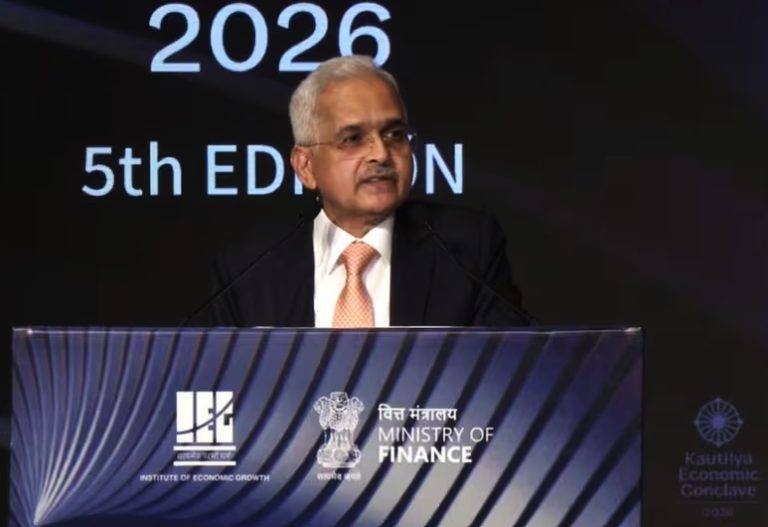
India’s financial sector has emerged as a key pillar of economic resilience, with banking reforms, improved asset quality and stronger profitability providing support to growth, Principal Secretary-2 to Prime Minister Shaktikanta Das said on Sunday.
Addressing the Kautilya Economic Conclave 2026 in New Delhi, Das said the restoration of the financial sector’s health has been one of the defining features of India’s resilience in recent years. He highlighted reforms including the Insolvency and Bankruptcy Code, bank recapitalisation and strengthened regulatory oversight as important drivers of the sector’s improvement.
He said the gross non-performing assets (NPAs) of banks had declined sharply to 1.68 per cent in June 2026, while bank profitability had improved significantly.
Das also underlined the resilience of India’s external sector, saying prudent management and a combination of factors—including export diversification, free trade agreements and a sustained surplus in services trade—had helped strengthen macroeconomic stability.
The current account deficit stood at 0.6 per cent of GDP in 2025-26, remaining well within manageable levels, he said.
Meanwhile, Saurabh Garg, Secretary, Ministry of Statistics and Programme Implementation, said India’s economic momentum was increasingly being reflected in upward revisions to the country’s growth projections by international agencies.
Speaking to reporters on the sidelines of the conclave, Garg said the economy had maintained its momentum after registering 7.8 per cent growth in the first quarter of FY2026-27. He attributed the positive trend to strong corporate performance and sustained investment activity, including continued capital expenditure by the private sector.
Garg said the improving outlook was also reflected in recent upward revisions to India’s growth estimates by international ratings agencies and research firms, including S&P Global Ratings and Fitch Ratings.
On risks from the ongoing tensions in West Asia and potential global oil price shocks, Garg said government measures, along with steps taken by households and the private sector, had helped contain the impact of external shocks on the Indian economy.