
Our Correspondent
India’s capital markets are increasingly becoming a primary destination for household savings and a major driver of wealth creation, reflecting a deeper structural shift in the country’s financial landscape, Securities and Exchange Board of India (SEBI) Chairperson Tuhin Kanta Pandey said on Monday.
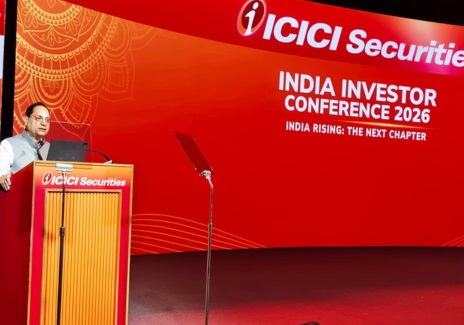
Speaking at the ICICI Securities India Investor Conference 2026, Pandey highlighted the rapid expansion of investor participation and said India’s financial markets are playing a growing role in channeling domestic savings into productive economic activity.
According to the SEBI chief, the country now has nearly 145 million investors participating in the securities market, with the investor base expanding at an annual pace of more than 20 per cent.
He pointed to the sharp rise in mutual fund penetration as a sign of changing household investment behaviour. Mutual fund assets under management, he said, have expanded from around ₹12 lakh crore to over ₹80 lakh crore over the years, while India’s market capitalisation has risen significantly—from nearly 69 per cent of GDP a decade ago to about 128 per cent currently.
Pandey said primary markets also recorded strong momentum in FY26. Equity issuances reached ₹4.5 lakh crore during the year, while 366 initial public offerings collectively mobilised nearly ₹1.9 lakh crore. Corporate bond issuances crossed ₹9 lakh crore, underlining the increasing importance of capital markets in financing business expansion and economic growth.
On regulation, Pandey said SEBI continues to follow an approach of “optimum regulation” aimed at balancing investor protection with ease of participation and long-term market development.
He stressed that investor trust remains central to market expansion and said regulatory reforms must focus on ensuring that investors feel informed, protected and treated fairly.
Against the backdrop of geopolitical uncertainties affecting inflation, trade flows, currency movements and global balances, Pandey said India continues to remain among the world’s fastest-growing major economies.
He argued that India’s growth story is increasingly being shaped not only by higher economic output but also by formalisation of the economy, financialisation of household savings and stronger institutional confidence.
“Indian capital markets are not merely reflecting economic growth—they are enabling it,” Pandey said, adding that markets are increasingly serving as the bridge between household savings and enterprise creation, converting economic momentum into investable opportunities.