
Last Updated on May 30, 2026 10:45 pm by INDIAN AWAAZ
Tribal Groups Protest Use of “Vanvasi” Term, Say It Undermines Adivasi Identity
Staff Reporter
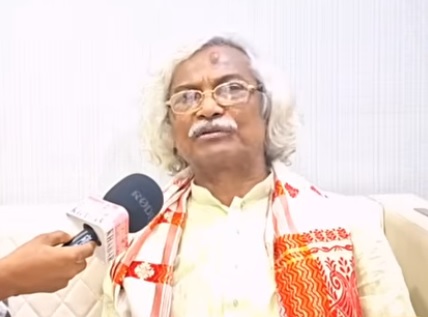
Senior tribal leader and former Jharkhand MLA Surya Singh Besra has accused the Centre of attempting to dilute the distinct identity of India’s tribal communities and called upon the country’s estimated 15 crore Adivasis to unite against what he described as a systematic effort to subsume them under the Hindu fold.
Addressing a gathering, Besra announced that tribal representatives from across the country would march to the national capital on June 25 to submit a memorandum to President Droupadi Murmu, seeking constitutional and administrative safeguards for the preservation of Adivasi identity.
Alleging a deliberate attempt to portray tribal communities as Hindus, Besra asserted that Adivasis constitute a distinct religious and cultural group with traditions that predate organised religions. He demanded that the upcoming national census include a separate religion column for tribal communities instead of classifying them under the “Others” category.
“Adivasis are neither Hindus, Muslims, Sikhs nor Buddhists. We have our own faith, customs and way of life which deserve independent recognition,” he said.
The former MLA argued that constitutional provisions recognise the unique status of tribal communities and that conversion to another religion does not erase an individual’s tribal identity. He maintained that Adivasi culture and beliefs are rooted in nature worship and ancestral traditions.
Besra also objected to the use of the term “Vanvasi” for tribal communities, insisting that they should be identified as “Adivasi”, a term that reflects their status as the original inhabitants of the land.
Launching a sharp attack on prominent tribal leaders associated with the BJP, including Arjun Munda and Babulal Marandi, Besra accused them of failing to protect tribal interests. He warned that tribal communities across several states could resort to social boycott of leaders who do not raise their voice on issues concerning Adivasi identity and rights.
The remarks come amid an ongoing debate over tribal identity, religious classification and demands for a separate code for indigenous faiths in official records and the national census
Tribal Groups Protest Use of “Vanvasi” Term, Say It Undermines Adivasi Identity
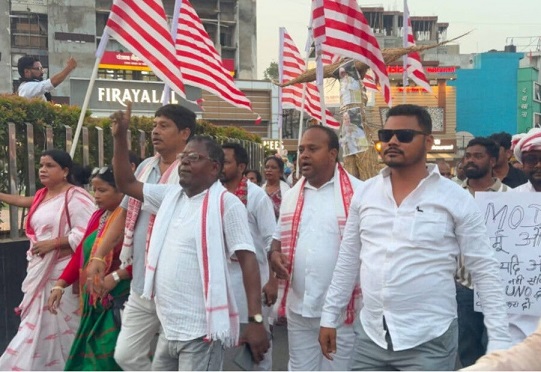
Meanwhile thousands of members of tribal communities and representatives of various Adivasi organizations staged a large protest march in Ranchi on May 26, 2026 Tuesday against the use of the term “Vanvasi” (forest dweller) by Indian Home Minister Amit Shah. Protesters argued that the term diminishes the historical, cultural and constitutional identity of India’s indigenous tribal peoples.
The controversy stems from remarks made by Shah during the “Tribal Cultural Conclave 2026” in New Delhi on May 24, where he reportedly used the term “Vanvasi” while referring to tribal communities. The remarks have sparked criticism from several tribal organizations across different states.
“Adivasi Is Our Identity”
Speaking at the protest, Amrit Chirag Tirkey, district president of the Bharat Adivasi Party in Simdega, said the word “Adivasi” represents centuries of indigenous history, culture, traditions and the communities’ relationship with land, forests and natural resources.
According to Tirkey, replacing “Adivasi” with “Vanvasi” amounts to an attempt to erase the community’s original identity and weaken its constitutional recognition.
“This is not merely a debate over terminology. It concerns our collective identity, dignity and constitutional rights,” he said.
Many tribal activists have long argued that the term “Adivasi,” meaning “original inhabitants,” reflects their historical connection to the land, while “Vanvasi” is viewed by critics as reducing tribal identity solely to a forest-based existence.
Debate over Reservation and Delisting
The protest also highlighted concerns over ongoing discussions surrounding the “delisting” of Scheduled Tribes who convert to other religions.
Tirkey alleged that organizations associated with the RSS and BJP were attempting to create divisions within tribal communities by linking tribal status to religious affiliation.
He argued that the constitutional framework governing Scheduled Tribes differs significantly from that governing Scheduled Castes. Under Article 342 of the Constitution, Scheduled Tribe status is determined by specific historical and social criteria, and there is no explicit constitutional provision stating that a person loses Scheduled Tribe status upon changing religion.
By contrast, the Constitution (Scheduled Castes) Order, 1950, historically linked Scheduled Caste status to specific religious communities, though later amendments extended eligibility to Sikhs and Buddhists.
Tribal organizations participating in the protest maintained that tribal identity is rooted in ethnicity, customary traditions, social structure and ancestral heritage rather than religious affiliation. They described proposals to remove ST reservation benefits on the basis of religious conversion as unconstitutional.
A Long-Standing Identity Debate
The dispute over the terms “Adivasi” and “Vanvasi” is not new. For decades, tribal rights groups have preferred the term “Adivasi,” emphasizing indigenous identity and historical belonging. Some organizations affiliated with the broader Sangh Parivar, however, have traditionally used the term “Vanvasi,” arguing that it reflects tribal communities’ close relationship with forests and nature. The difference reflects competing perspectives on history, identity and representation, making the terminology politically and culturally sensitive.