
Last Updated on April 10, 2026 3:56 pm by INDIAN AWAAZ
The enduring trust of millions of patients suggests that homeopathy continues to hold a meaningful place in India’s healthcare landscape.
S QUEYAM UDDIN
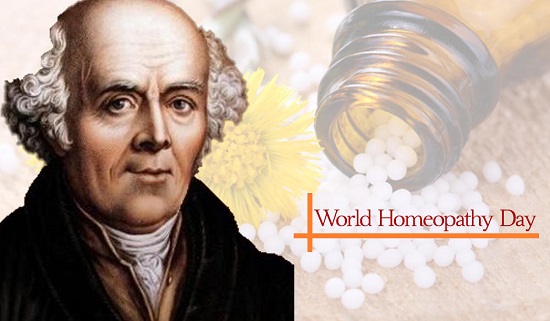
Every year World Homeopathy Day is observed on April 10, marking the birth anniversary of Samuel Hahnemann, the German physician who founded the system of medicine more than two centuries ago. The day is not merely symbolic; it serves as an opportunity to reflect on the evolution of homeopathy, its continued relevance in modern healthcare, and the challenges it faces in gaining broader scientific recognition.
Homeopathy was developed in the late 18th century on the principle of “similia similibus curentur”—or “like cures like.” The idea suggests that a substance capable of producing symptoms in a healthy individual can treat similar symptoms in a sick person when administered in highly diluted doses. Over time, the practice spread from Europe to various parts of the world, eventually finding a particularly strong foothold in India.
India: A Global Hub for Homeopathy
Today, India is widely regarded as one of the largest centers of homeopathic practice globally. Millions of patients across the country rely on homeopathic treatment as either a primary or complementary form of healthcare. According to estimates from the Ministry of AYUSH, India has hundreds of thousands of registered homeopathy practitioners and thousands of dispensaries and hospitals dedicated to the system.
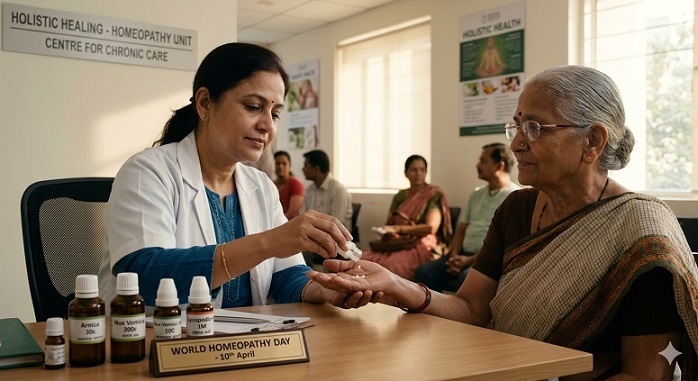
The widespread popularity of homeopathy in India stems from several factors. The treatment is considered relatively affordable, easily accessible, and generally free from the side effects often associated with conventional medicines. In rural and semi-urban areas, where access to specialized healthcare can sometimes be limited, homeopathy clinics frequently serve as an important component of primary healthcare services.
The government has also played a key role in institutionalizing the system. Through the Central Council for Research in Homoeopathy and academic bodies such as the National Commission for Homoeopathy, India has established research institutes, colleges, and regulatory frameworks aimed at maintaining standards in education and clinical practice.
Strong Patient Preference for Chronic Conditions
One of the most notable trends in India’s healthcare landscape is the strong patient preference for homeopathy in managing chronic diseases. Conditions such as allergies, asthma, arthritis, migraine, skin disorders, and autoimmune problems often require long-term treatment, and many patients turn to homeopathy in search of sustained relief.
Patients frequently report that homeopathic remedies help reduce the intensity and recurrence of symptoms while improving overall well-being. Practitioners argue that the system focuses not merely on the disease but on the individual’s physical, emotional, and lifestyle factors. This holistic approach is seen by supporters as one of the main reasons behind the therapy’s continuing appeal.
Another factor contributing to its popularity is the perception that homeopathy addresses the “root cause” of illnesses rather than simply suppressing symptoms. For chronic ailments where conventional treatments may involve prolonged medication or potential side effects, many patients consider homeopathy a safer alternative or a complementary therapy alongside modern medicine.
Urban India has also witnessed a revival of interest in alternative and integrative healthcare practices. Wellness-conscious patients, particularly in metropolitan areas, increasingly seek treatments that emphasize gentle healing, personalized care, and long-term health management. In this environment, homeopathy has maintained a loyal patient base.
Growing Integration with Public Health
Over the past two decades, homeopathy has increasingly been incorporated into public health initiatives. Government hospitals and wellness centers under the Ministry of AYUSH often provide homeopathic consultations alongside other traditional systems such as Ayurveda and Unani.
During seasonal outbreaks and epidemics, homeopathic preventive measures have sometimes been distributed in certain regions as part of community health programs. While these efforts remain debated within the broader medical community, they reflect the government’s attempt to integrate traditional systems into a pluralistic healthcare model.
Educational institutions across India also offer formal degrees in homeopathy, producing thousands of practitioners every year. This extensive educational network has contributed to the widespread availability of practitioners across both urban and rural regions.
Persistent Challenges to Wider Acceptance
Despite its deep-rooted presence in India, homeopathy continues to face several challenges—particularly in the areas of scientific research, funding, and global acceptance.
One of the most frequently cited concerns is the lack of large-scale, high-quality clinical trials that meet modern biomedical research standards. Critics argue that while anecdotal evidence and patient testimonials are abundant, more rigorous scientific studies are necessary to validate the effectiveness of homeopathic treatments in a universally accepted manner.
Funding limitations also constrain research efforts. Compared with conventional pharmaceutical research, investment in homeopathic drug development and clinical studies remains relatively modest. As a result, many promising research initiatives struggle to scale up or achieve international visibility.
Another challenge lies in the dissemination of research findings. Even when studies are conducted, they often appear in specialized journals with limited global reach, reducing their impact on mainstream scientific discourse. Improving collaboration between homeopathic researchers and multidisciplinary scientific institutions could help address this gap.
The Road Ahead
As healthcare systems worldwide increasingly explore integrative medicine models, homeopathy stands at an important crossroads. Supporters believe that with stronger scientific validation, better research infrastructure, and improved communication with the wider medical community, the system could gain broader recognition.
For India, where homeopathy has become deeply embedded in the healthcare ecosystem, the task ahead is not only to preserve this tradition but also to strengthen its scientific credibility. On World Homeopathy Day, the discussion therefore extends beyond celebration—it becomes a call to advance research, ensure quality education, and foster informed dialogue between traditional and modern medical systems.
Ultimately, the enduring trust of millions of patients suggests that homeopathy continues to hold a meaningful place in India’s healthcare landscape. The challenge now is to ensure that this centuries-old healing tradition evolves with the demands of modern science and public health.