
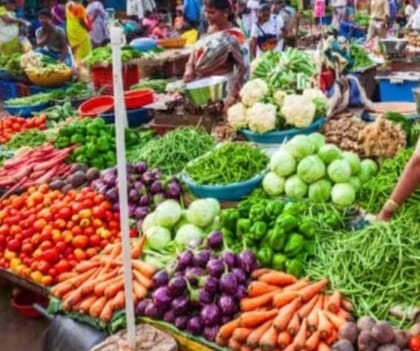
India’s inflation based on the Wholesale Price Index (WPI) slipped deeper into negative territory in July 2025, touching a two-year low of (-) 0.58% compared with the same month last year. According to data from the Ministry of Commerce and Industry, this sharp moderation was driven mainly by falling prices of food items and fuels such as petrol, diesel, and natural gas.
The July WPI reading is even lower than the (-) 0.13% recorded in June 2025, marking the fourth consecutive month of easing wholesale inflation. The downtrend began in March and gained momentum after WPI hit a 14-month low of 0.39% in May.
What’s Driving the Decline
The food index contracted by 2.15% in July, reflecting price drops in pulses, cereals, vegetables, and edible oils. Fuel and power costs also fell by 2.43% year-on-year, aided by lower global crude prices and domestic tax stability. Economists point out that cheaper fuel reduces transport costs, which in turn eases input prices for a wide range of goods and services.
This deflationary trend at the wholesale level could gradually filter into the Consumer Price Index (CPI) — India’s benchmark retail inflation gauge — as lower bulk prices get passed on to end consumers.
Retail Inflation Also Hits Multi-Year Low
The CPI inflation rate fell to 1.55% in July, the lowest since June 2017. This was down from 2.1% in June 2025, which itself had been the lowest retail inflation since January 2019.
Retail food inflation turned negative at (-) 1.76%, reflecting cheaper prices for pulses, vegetables, cereals, eggs, and sugar. Apart from food, several non-food categories also saw easing cost pressures, including transport, communication, education, and housing. Analysts attribute part of this moderation to a favourable base effect — meaning the comparison is being made against a higher price level from the same month last year.
RBI’s Outlook Remains Cautiously Optimistic
The Reserve Bank of India (RBI) has forecast CPI inflation at 3.1% for FY 2025-26, citing strong monsoon performance, robust kharif sowing, healthy reservoir levels, and comfortable buffer stocks of food grains. These factors are expected to keep food inflation largely in check for the rest of the year.
RBI Governor Sanjay Malhotra recently commented:
“The inflation outlook for 2025-26 has become more benign than expected. Large favourable base effects, healthy kharif sowing, adequate reservoir levels, and comfortable buffer stocks of food grains have contributed to this moderation.”
Risks Ahead
While the current figures indicate a cooling inflationary trend, economists warn that CPI inflation could climb above 4% in the final quarter of FY 2025-26. This potential rebound could be triggered by an unfavourable base effect, stronger consumer demand, and certain policy-driven spending boosts.
Core inflation — which excludes volatile food and fuel prices — is expected to hover slightly above 4% for most of the year, barring any unexpected supply shocks or spikes in global commodity prices.
The Big Picture
The twin moderation in wholesale and retail inflation offers a short-term cushion for consumers, policymakers, and businesses. It also gives the RBI more room to maintain an accommodative stance, supporting growth without the immediate pressure of runaway prices. However, with global oil markets remaining volatile and domestic demand expected to firm up in the festive season, inflation management will remain a key challenge in the months ahead. AMN