
Last Updated on June 20, 2026 7:08 pm by INDIAN AWAAZ
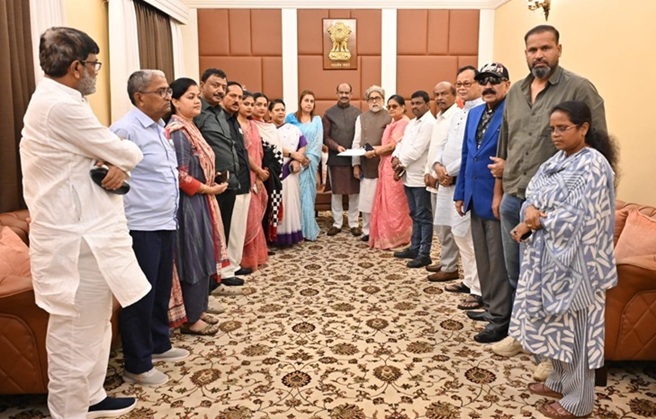
Our Correspondent / New Delhi
The possibility of disqualification is looming large over the 20 rebel Trinamool Congress (TMC) Lok Sabha MPs, with Lok Sabha Speaker Om Birla initiating the process of hearing petitions filed under the Tenth Schedule of the Constitution.
The Speaker has given an opportunity to TMC’s Leader in the Lok Sabha, Abhishek Banerjee, to present the party’s case before taking a decision on the disqualification petitions against the rebel MPs.
Constitutional experts say the Speaker’s decision to hear all sides before adjudicating the matter is in keeping with established legal procedure.
According to sources, the petitions filed by the TMC invoke Paragraphs 2 and 4 of the Tenth Schedule, commonly known as the Anti-Defection Law.
The party has argued that the group of 20 rebel MPs does not qualify as a separate legislative bloc under the provisions of the law, strengthening its case for their disqualification.
Legal experts point to the Supreme Court’s ruling in the Shiv Sena-Shinde Sena case, in which the apex court expressed reservations over the manner in which constitutional authorities dealt with claims of a split in the legislative party.
The court observed that following the Constitution (Ninety-first Amendment) Act, 2003, the provision recognising a “split” was removed from the Anti-Defection Law.
Under the amended law, only a merger supported by at least two-thirds of the members of a party with another political party is protected from disqualification. A split by a faction or group, without a valid merger, does not enjoy constitutional protection.
In the context of Indian politics, the term “1992 Anti-Defection Act” refers to a landmark Supreme Court ruling (specifically Kihoto Hollohan v. Zachillhu in 1992) that fundamentally altered the country’s Anti- Defection Law.
This ruling established that decisions made by a Presiding Officer (Speaker/Chairman) regarding political defections are subject to judicial review.
The Speaker is expected to adjudicate the petitions after hearing all concerned parties. The outcome could have significant political implications for the rebel MPs as well as the Trinamool Congress.