
Last Updated on April 12, 2026 12:58 pm by INDIAN AWAAZ
‘Discussions were substantive but failed to produce a deal’ Vance says it’s bad news for Iran, much more than the United States of America
AMN / WEB DESK
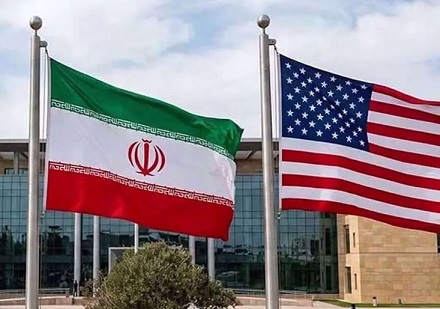
The historic talks between the United States and Iran under Pakistan mediation ended without an agreement after nearly 21 hours of negotiations in Islamabad. The US Vice President JD Vance said the discussions were substantive but failed to produce a deal.
The US Vice President said the core of the disagreement is Washington’s demand for a clear and long-term commitment from Tehran not to pursue nuclear weapons or capabilities that could enable rapid weaponisation. He said the US side described its approach as flexible and in good faith, but Iran did not accept the proposed terms. He added that a final and best offer has now been placed before Iran, with Washington awaiting Tehran’s response.
Iran’s Foreign Ministry spokesman Esmaeil Baqaei said on Sunday that the two sides reached a consensus on some issues, but they held different views regarding 2-3 important matters.
“Finally, the talks did not reach an agreement,” he noted.
He also described the fresh round of Iran-US negotiations, which lasted for 24 or 25 hours, as the longest over the past year.
The discussions took place following the 40-day imposed war on Iran in an atmosphere of distrust and suspicion, he emphasized, adding, “Therefore, it was not expected that the talks would reach a consensus.”
Meanwhile, Baqaei said that the talks covered some new issues with their own complexities, such as the Strait of Hormuz.
He further stressed that diplomacy never ends, as it is a tool to preserve national interests.
In an earlier statement shared by the Government of the Islamic Republic of Iran on X, Tehran indicated that the dialogue would continue even as some disagreements remain unresolved. The meeting marks the highest-level direct engagement between Washington and Tehran in decades. The talks were seen as a key diplomatic effort to reduce tensions and explore possibilities of a structured understanding between the United States and Iran. Key issues included efforts toward a ceasefire in West Asia, the release of Iranian assets held by the US, and discussions on the Strait of Hormuz. Amid talks, US President Donald Trump said it made no difference whether a deal was reached with Iran. Speaking to reporters, President Trump added that operations in the Strait of Hormuz were ongoing and asserted that the United States had already won.
The US delegation was led by Vice President JD Vance, along with special envoy Steve Witkoff and Jared Kushner, supported by senior advisers. Iranian Parliament Speaker and delegation head Mohammad Baqer Qalibaf, Foreign Minister Abbas Araghchi, and Deputy head of the Supreme National Security Council Ali Bagheri-Kani participated in the talks.
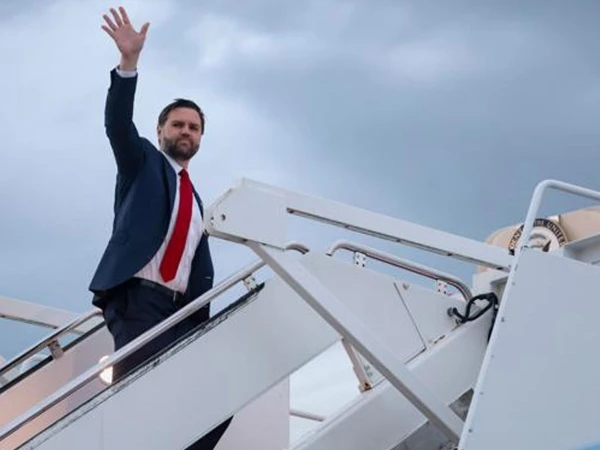
Earlier, US Vice President JD Vance left Pakistan after announcing that intensive discussions with Iran failed to reach an agreement, yet he appreciated Pakistan’s efforts.
“We have been at it now for 21 hours, and we’ve had a number of substantive discussions with the Iranians. That’s the good news. The bad news is that we have not reached an agreement, and I think that’s bad news for Iran much more than it’s bad news for the United States of America,” he said while addressing a press conference.
‘No agreement expected from single session’
The Spokesperson for Iran’s Ministry of Foreign Affairs, Esmaeil Baqaei, wrote on X that it “was a busy and long day for the delegation of the Islamic Republic of Iran in Islamabad”, during which “numerous messages and texts have been exchanged between the two sides.”
“In the past 24 hours, discussions were held on various dimensions of the main negotiation topics, including the Strait of Hormuz, the nuclear issue, war reparations, lifting of sanctions, and the complete end to the war against Iran and in the region,” he wrote.
“The success of this diplomatic process depends on the seriousness and good faith of the opposing side, refraining from excessive demands and unlawful requests, and the acceptance of Iran’s legitimate rights and interests.”
Baqaei also expressed appreciation to the “government and the warm-hearted and noble people of the Islamic Republic of Pakistan for hosting the negotiations and their benevolent efforts in advancing this process”.
In a separate statement carried by Iran’s Mehr news agency, Baqaei maintained that the negotiations were taking place after “40 days of the imposed war”.
“It is natural, from the beginning, we should not have expected to reach an agreement within a single session. No one had such an expectation either,” he was quoted as saying.
He added that the delegations reached “understanding” on several issues; however, he stated that “on 2-3 important issues, views were far apart, and ultimately, the talks did not lead to an agreement”.
He further stated the negotiations lasted for “a total of 24 or 25 hours and highlighted that another point of contention was “the complexity of the issues and the circumstances”.
He held that during the negotiations, “some new issues, such as the issue of the Strait of Hormuz, were added”.
“Each of these has its own complexity,” Mehr quoted Baqaei as saying.
“Under any circumstances, we in the diplomatic apparatus must pursue the rights and interests of the Iranian people,” he added.
The trilateral talks, which commenced on Saturday afternoon, saw the US and Iranian delegations engage in discussions over three sessions, with teams of experts from the two parties exchanging written texts after each session.
The Iranian government said in a post on X that the talks were held at the “expert-level stage as economic, military, legal, and nuclear committees joined”.
“Negotiations continue at the Serena Hotel to finalise technical details,” it had added.
Meanwhile, in a video statement, Israeli Prime Minister Benjamin Netanyahu said the campaign against Iran is not yet over but claimed Israel has achieved historic gains and foiled Iran’s nuclear ambitions. He said Israel launched the campaign because Iran was close to acquiring nuclear weapons and had the capability to produce hundreds of missiles per day.
What we know about the talks :
- JD Vance said US-Iran talks in Islamabad lasted 21 hours but ended without an agreement.
- Iran’s Foreign Ministry spokesperson said delegations reached an understanding on several points, but “views far apart” on two to three issues.
- The US insisted on guarantees that Iran would not pursue nuclear weapons, which Tehran refused to accept.
- Both sides held “substantive discussions” and exchanged proposals on issues like sanctions, nuclear policy, and regional conflict.
- Iran said progress depends on US “good faith” and recognition of its rights, including sanctions relief and access to funds.
- Pakistan was praised by both sides for mediating despite the deadlock