
Last Updated on March 29, 2026 1:07 pm by INDIAN AWAAZ
News Desk
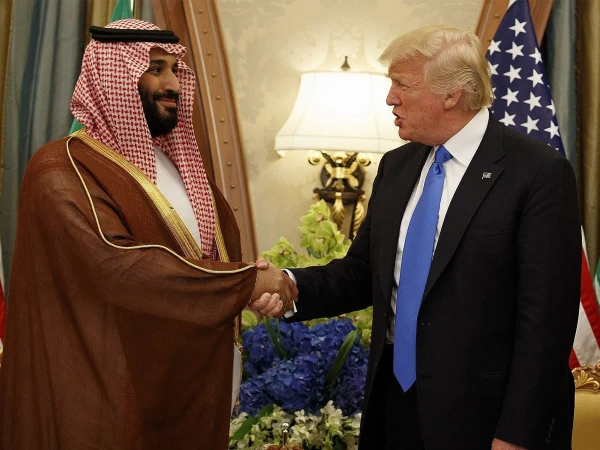
The Recent remarks by US President Donald Trump about Saudi Arabia’s crown prince have triggered widespread debate across diplomatic and political circles, raising questions about the tone and direction of American foreign policy.
Speaking at a major investment forum, Trump claimed that Mohammed bin Salman “didn’t think he would be kissing my ass… but now he has to be nice to me,” describing the relationship in unusually blunt and personal terms. The comment quickly drew international attention and criticism, with analysts saying it publicly reframed one of Washington’s most important Middle East partnerships.
For decades, ties between the United States and Saudi Arabia have been presented as a strategic partnership built on shared interests — particularly energy cooperation, defense coordination and regional stability.
Trump’s statement, however, appeared to portray the relationship through a lens of leverage and personal influence. Critics argue that describing an ally in such terms risks undermining the diplomatic language traditionally used to manage sensitive geopolitical relationships.
The remarks have therefore sparked a broader debate about how alliances are publicly framed and whether rhetoric can reshape global perceptions of power and partnership.
Contradictory Messaging
Adding to the controversy was the contrast in Trump’s own comments. In the same speech, he praised Mohammed bin Salman as a “fantastic man” and a “warrior,” highlighting the complex nature of Washington’s relationship with the Saudi leadership.
This combination of praise and mockery reflects a broader pattern in Trump’s foreign policy style, where international relations are often described in personal and transactional terms. Supporters argue that such bluntness signals negotiating strength, while critics warn that it risks blurring the line between diplomacy and political theater.
Timing Amid Regional Tensions
The timing of the remarks has further intensified the discussion. The ongoing confrontation involving Iran and its regional implications have already heightened tensions across the Middle East, forcing countries such as Saudi Arabia to carefully balance their strategic partnerships.
Riyadh has maintained close security cooperation with Washington but has also shown caution about being drawn into a prolonged regional conflict that could threaten economic stability and long-term development plans.
Trump suggested during his remarks that the Saudi crown prince supports Washington’s approach toward Tehran, indicating coordination behind the scenes. However, Saudi Arabia’s public posture has generally remained more measured.
Alliance Under the Spotlight
Despite the controversy, analysts say the structural pillars of US–Saudi relations remain strong. Security cooperation, energy ties and long-standing geopolitical interests continue to bind the two countries together.
Still, the debate sparked by Trump’s remark underscores an important reality of modern diplomacy: tone and language can shape global perceptions of alliances just as much as formal agreements.
In a region already marked by volatility, many observers say such statements risk adding political sensitivity to a partnership that relies heavily on trust and coordination—raising broader questions about the future character of international alliances.