
Last Updated on September 8, 2025 6:08 pm by INDIAN AWAAZ
Unrest sparked by the government’s ban on major social media platforms
AMN / WEB DESK
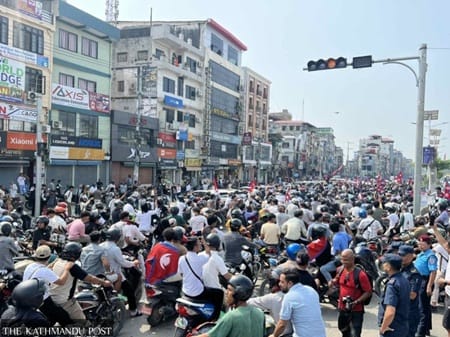
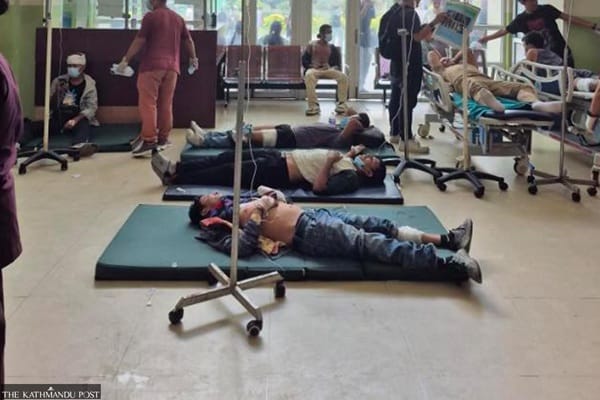
At least 14 people were killed and more than 100 injured in Kathmandu on Monday after police opened fire on thousands of Gen Z protesters during a violent confrontation in Baneshwor, near the Federal Parliament. The unrest was sparked by the government’s controversial ban on major social media platforms, which went into effect nationwide on September 4.
What began as a digital rights protest quickly escalated when demonstrators breached security barricades and attempted to storm the Parliament premises. Authorities initially tried to control the crowd using tear gas, water cannons, rubber bullets, and warning shots, but tensions spiraled out of control, triggering deadly clashes.
According to early reports, five people died at the Trauma Centre, two at Civil Hospital, and one at Kathmandu Medical College, while the identities of several other victims are yet to be confirmed.
In response to the violence, Prime Minister K.P. Sharma Oli has called an emergency meeting of the Council of Ministers and the National Security Council at his residence this evening.
The Kathmandu District Administration Office has imposed a curfew from 12:30 PM to 10 PM in several sensitive areas, including Baneshwor, Tinkune, and key government zones such as Singhadurbar and the President’s Office.
The protest movement was primarily mobilised by young citizens using TikTok, in reaction to the government’s ban on unregistered platforms including Facebook, Instagram, X (formerly Twitter), and YouTube. Protesters argue the ban is a direct attack on freedom of speech and digital expression, demanding transparency, accountability, and an immediate reversal of the decision.
The situation remains tense, with human rights groups and opposition leaders condemning the government’s heavy-handed response and warning of further unrest if public grievances are not addressed promptly.
The Kathmandu District Administration Office has extended the curfew after Gen Z protesters clashed with police while opposing government corruption and the recent social media ban.
The curfew, initially imposed in parts of Baneshwar after protesters broke into a restricted area, now covers a wider zone. It includes the President’s residence, Shital Niwas area, Maharajgunj, the vice-president’s residence in Lainchaur, all sides of Singha Durbar, the prime minister’s residence in Baluwatar, and surrounding areas.
Authorities have said the extension is intended to prevent further unrest and ensure security in sensitive government locations.
The curfew, issued by Chief District Officer Chhabilal Rijal under Section 6 of the Local Administration Act, is in effect from 12:30 pm to 10 pm. Movement, gatherings, demonstrations, or encirclements within these zones are strictly prohibited.
Police had previously set up barricades to control the demonstration, but protesters pushed through, leading officers to respond with water cannons and teargas. Protesters threw tree branches and water bottles, shouting slogans against government corruption, and some even entered the Parliament premises.