
Last Updated on February 23, 2026 7:56 pm by INDIAN AWAAZ
Staff Reporter / New Delhi
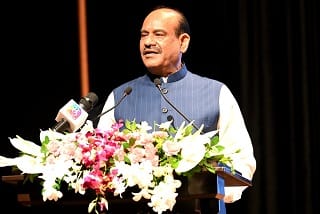
In a major push to expand India’s inter-parliamentary outreach, Om Birla has announced the formation of Parliamentary Friendship Groups with more than 60 countries. The initiative underscores a focused effort by the Indian Parliament to strengthen engagement with legislatures worldwide and to complement conventional diplomacy with sustained parliamentary dialogue.
These Friendship Groups comprise Members of Parliament drawn from across party lines. Prominent leaders such as Ravi Shankar Prasad, P. Chidambaram, Ram Gopal Yadav, Kanimozhi Karunanidhi, Gaurav Gogoi, Asaduddin Owaisi, Akhilesh Yadav, Supriya Sule, Shashi Tharoor, Anurag Thakur and several others will head these groups, reflecting a broad-based and inclusive representation.
Parliamentary Friendship Groups have been constituted with countries spanning Asia, Europe, Africa, and the Americas, including Sri Lanka, Germany, New Zealand, Switzerland, South Africa, Bhutan, Saudi Arabia, Israel, Maldives, the United States, Russia, the European Parliament, South Korea, Nepal, the United Kingdom, France, Japan, Italy, Oman, Australia, Greece, Singapore, Brazil, Vietnam, Mexico, Iran and the United Arab Emirates.
The core objective of this initiative is to facilitate direct interaction between Indian lawmakers and their counterparts abroad. By sharing legislative experiences and best practices, the groups aim to foster trust, enhance mutual understanding, and deepen bilateral cooperation. Beyond parliamentary procedures, discussions are expected to cover trade, technology, social policy, culture, and the common global challenges confronting democracies.
Speaker Om Birla has repeatedly highlighted the importance of parliamentary diplomacy in elevating India’s global profile. Under his leadership, Parliament has assumed a more proactive role in international platforms, presenting India as a confident and mature democracy ready to engage constructively with the world.
By strengthening Parliament-to-Parliament and people-to-people ties, the move signals a participatory and dialogue-driven approach to foreign engagement. The Friendship Groups are expected to organize structured exchanges through visits, interactions, and joint deliberations, ensuring sustained cooperation grounded in democratic values. In doing so, the Indian Parliament reaffirms its role as a vital bridge between nations and as a living embodiment of the world’s largest democracy.
Notably, following Operation Sindoor, Narendra Modi initiated the dispatch of multi-party delegations to various countries to present India’s perspective on key issues. By bringing together leaders from different political backgrounds to represent the nation globally, the initiative transcended partisan lines and conveyed a clear message of unity on matters of national interest and security. It reinforced the principles of dialogue, inclusiveness, and collective responsibility—hallmarks of India’s democratic ethos.
While the first phase covers more than 60 nations, efforts are underway to expand the network of Parliamentary Friendship Groups to additional countries in the near future, further broadening India’s parliamentary diplomacy footprint.