
Last Updated on April 12, 2026 12:52 am by INDIAN AWAAZ
AMN / KOLKATA
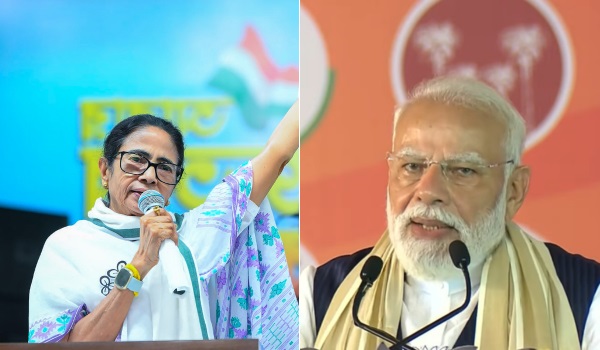
Campaigning for the West Bengal Assembly elections has entered an intense phase, with major political parties stepping up their outreach efforts across the state. Senior leaders from the Bharatiya Janata Party (BJP) and the Trinamool Congress (TMC) addressed multiple rallies, highlighting key issues and presenting their visions to voters.
Prime Minister Narendra Modi led the BJP’s campaign push with rallies in Katwa, Jangipur and Kushmandi. In his speeches, he focused on themes of governance, identity and security, while reiterating the party’s promise to introduce the Uniform Civil Code. He also criticised the ruling TMC over issues of corruption and administration, stating that the BJP would aim to deliver a transparent and development-oriented government if voted to power. The Prime Minister described the elections as crucial for the future direction of the state.
Following his rally in Kushmandi, Mr Modi also held a roadshow in Siliguri, drawing significant public participation. Supporters gathered along the route as he travelled from Bihar More to Station More and later proceeded towards Sukna.
Union Home Minister Amit Shah also addressed public meetings in Purulia and Bankura, where he raised concerns about border management and infiltration. He outlined several promises, including faster implementation of development measures, benefits for government employees under the seventh pay commission, and direct financial support for farmers, senior citizens, widows and persons with disabilities. He also spoke about initiatives aimed at promoting local industries, including support for traditional crafts such as Baluchari sarees and Panchmura terracotta.
On the other hand, Chief Minister Mamata Banerjee intensified her campaign for the Trinamool Congress, addressing rallies in Bankura, West Midnapore and Jhargram. She highlighted her government’s welfare initiatives and emphasised efforts made towards employment generation and support for small entrepreneurs. Referring to schemes such as Karmatirtha, she said the state government has worked to promote self-employment and economic opportunities for the youth.
With both sides presenting contrasting narratives—focusing on governance, development, identity and welfare—the campaign has become increasingly competitive. As polling day approaches, political activity is expected to further intensify, with parties seeking to consolidate support across urban and rural constituencies alike.