
Last Updated on April 9, 2026 8:06 pm by INDIAN AWAAZ
Zakir Hossain from Dhaka
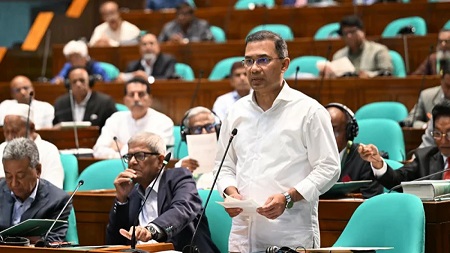
Bangladesh’s Parliament on Thursday passed a bill restoring the National Human Rights Commission Act, 2009, and repealing the former interim government’s National Human Rights Commission (Amendment) Ordinance, 2025.
The National Human Rights Commission (Repeal and Re-enactment) Bill, 2026, was passed by voice vote during the first parliamentary session despite strong objections from opposition lawmakers.
The 2025 ordinance had been issued on December 5, 2024, by the interim government led by Muhammad Yunus. Law Minister Md Asaduzzaman moved the new bill to repeal it.
Opposition lawmaker Hasnat Abdullah of Cumilla-4 constituency, strongly opposed the move, saying the bill effectively restored a law that had earlier been used to suppress dissent. “We have seen that this commission used to justify actions against opposition parties, particularly the BNP. Even the commission’s chairman once suggested that shooting Jamaat activists could be justified in the name of protecting human rights,” he said.
Calling the move a “backward step”, Hasnat said the repeal of the 2025 ordinance and return to the 2009 framework would serve as a textbook example of national regression.
Responding, the law minister said Hasnat had delivered “an engaging speech fit for the streets” without reading the bill. “The very first line of the bill states that, pending broader consultations and review with relevant stakeholders, and to ensure that the National Human Rights Commission does not remain vacant, the 2009 law has been restored temporarily,” he said.
He further told Parliament that repealing the ordinance without reviving the earlier law would create the impression internationally that Bangladesh currently had no human rights commission.
The 2025 ordinance had expanded the commission’s jurisdiction to investigate complaints against the military and other disciplinary forces. Article 15 abolished the “superior orders” defence, preventing liability from being avoided on the ground of following orders. It also empowered the commission to initiate cases, intervene in court and seek redress for victims. The interim government had promulgated 133 ordinances between August 8, 2024, and February 17, 2026.