
Last Updated on April 13, 2026 6:11 pm by INDIAN AWAAZ
By Andalib Akhter / New Delhi
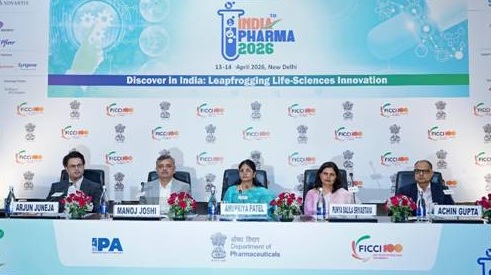
The 9th edition of India Pharma 2026, the flagship event of the Department of Pharmaceuticals (DoP), Ministry of Chemicals and Fertilizers, Government of India, commenced here today. Organised in collaboration with the Federation of Indian Chambers of Commerce and Industry (FICCI) and the Indian Pharmaceutical Alliance (IPA), the two-day conference, brings together key stakeholders from the global pharmaceutical and healthcare ecosystem. The event is centred on themes of innovation, self-reliance, and strengthening India’s position as a global leader in life sciences.
Addressing the inaugural session virtually, Union Minister of Health and Family Welfare and Chemicals and Fertilizers, Mr J.P. Nadda, said the platform reflects both the strength and growing global relevance of India’s pharmaceutical sector. He noted that while India has earned recognition as the “pharmacy of the world” for its leadership in affordable generic medicines, the global industry is now shifting towards biologics, biosimilars, and specialty medicines. In this evolving landscape, he asserted, India is well positioned not only to adapt but also to emerge as a global leader.
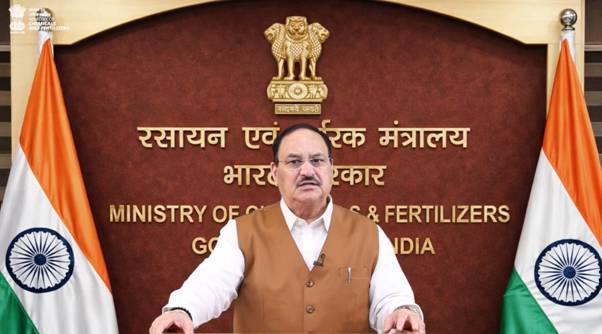
Reaffirming the Government’s commitment to innovation, Mr Nadda highlighted the recently launched Biopharma Shakti Initiative, with an outlay of ₹10,000 crore, aimed at strengthening capabilities in biopharmaceutical research and development. He also pointed to complementary initiatives such as the PRIP scheme to promote research in pharmaceuticals and medical technology, as well as Production Linked Incentive (PLI) schemes and bulk drug parks designed to boost domestic manufacturing and resilient supply chains. He further underscored the importance of the Pradhan Mantri Bharatiya Jan Aushadhi Pariyojana in expanding access to affordable medicines across the country.
Minister of State for Health and Family Welfare and Chemicals and Fertilizers, Ms Anupriya Patel, said India is transitioning from a global generics leader to an emerging hub for biopharma innovation. She noted that India currently contributes nearly 20 per cent of global generic medicines and meets about 70 per cent of global vaccine demand. Highlighting future opportunities, she said the biosimilars market is projected to reach $75 billion by 2030, while innovative drugs account for nearly 87 per cent of global pharmaceutical market value.
She also emphasised the growing role of artificial intelligence in drug discovery and the need to strengthen human capital through premier institutions such as NIPERs and IITs.
Mr Manoj Joshi, Secretary, Department of Pharmaceuticals, stressed the need to accelerate innovation timelines, strengthen startup ecosystems, and enhance infrastructure for clinical trials and advanced research. Ms Punya Salila Srivastava, Secretary, Ministry of Health and Family Welfare, reiterated the Government’s commitment to regulatory reforms and easing research processes to position India as an “innovator for the world.”
Mr Arjun Juneja of FICCI highlighted India’s strong pharmaceutical base, with over 3,000 companies and more than 10,500 manufacturing facilities, including the highest number of USFDA-compliant plants outside the United States. Mr Achin Gupta of Cipla Ltd delivered the vote of thanks.
The conference will feature discussions on policy frameworks, artificial intelligence in drug discovery, and next-generation technologies, and is expected to shape the future roadmap of India’s pharmaceutical sector.