
Last Updated on April 7, 2026 11:08 pm by INDIAN AWAAZ
Humanitarian and economic pressures grow; Russia and China veto resolution on Strait of Hormuz
Human rights chief Volker Türk says President Trump’s threat to annihilate Iranian civilisation is “sickening”.
AMN / UN NEWS
Regional stability in the Middle East deteriorated further on Tuesday as intensifying hostilities crippled critical infrastructure and pushed humanitarian services to a breaking point. While the human cost of the conflict continues to mount, a significant diplomatic effort to secure global energy corridors was thwarted at the United Nations.
Security Council Standoff
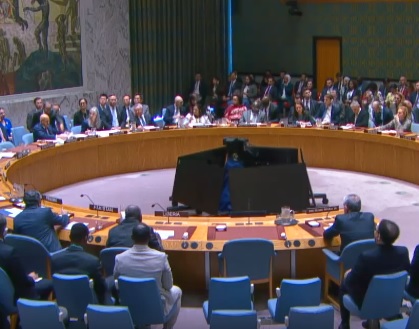
In a high-stakes session at the UN Security Council in New York, a resolution spearheaded by the Gulf Cooperation Council (GCC) states was defeated. The proposal aimed to establish a security framework for merchant vessels navigating the Strait of Hormuz—the world’s most vital oil chokepoint.
The resolution was blocked by dual vetoes from China and Russia, signaling a deepening fracture between global powers over regional intervention. The vetoes have raised immediate concerns regarding the safety of international shipping and the potential for a fresh spike in global energy prices.
Meanwhile, displacement remains high, aid access is constrained. Human rights chief Volker Türk says President Trump’s threat to annihilate Iranian civilisation is “sickening”.
Impact on Infrastructure and Aid
On the ground, the conflict has shifted from military engagements to a broader assault on the region’s viability:
Civilian Toll: The escalation has led to a sharp increase in civilian displacement, with urban centers increasingly caught in the crossfire.
HIGHLIGHTS
Infrastructure Degradation: Sustained strikes have targeted power grids, water treatment facilities, and transport hubs, leading to widespread service blackouts.
Humanitarian Crisis: Aid agencies report that “mounting pressure” is rendering local hospitals and relief corridors nearly inoperable.
- Russia and China vetoed a Gulf State-backed resolution in the Security Council on freeing up the Strait of Hormuz – follow full live coverage here.
- UN human rights chief deplores ‘tirade of incendiary rhetoric’ from all combatants, calls Trump threat to annihilate Iranian civilisation ‘sickening’
- WHO contractor killed in Gaza, prompting the suspension of medical evacuations via Rafah until further notice.
- Lebanon’s mental health crisis deepens, with WHO reporting surging trauma and growing demand for mental health support.
- Humanitarian needs are becoming more critical in Iran amid ongoing strikes, infrastructure damage and flooding are driving rising casualties, displacement and urgent needs across multiple sectors.
China says text contained one-sided condemnation
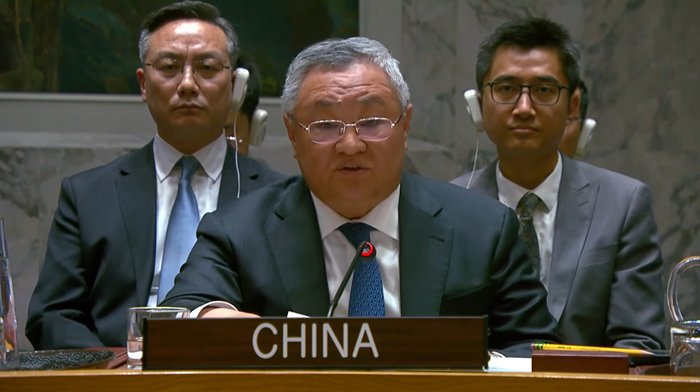
“The draft resolution failed to capture the root causes and the full picture of the conflict in a comprehensive and balanced manner,” said Ambassador Fu Cong of China.
UN News
“The Security Council should not rush to vote on a draft resolution when serious concerns have been raised by members,” he said.
He expressed hope that peace and stability would be restored and affirmed China’s commitment to addressing the situation properly by tackling its root causes.
“This war should never have happened,” he added, blaming the United States and Israel as instigators and urging them to halt what he described as illegal military actions.
He also emphasized that China’s position is objective and balanced, and called on Iran to stop its attacks.
Follow the Security Council deliberations here.Today 22:46
Resolution ‘abounded with unbalances, inaccurate and confrontational elements’: Russia
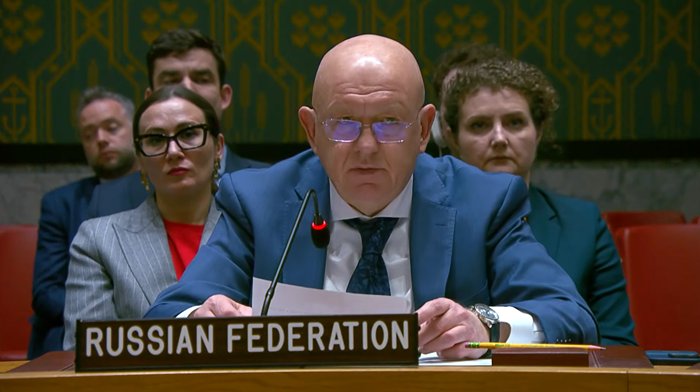
Back in the Security Council, Russian Ambassador Vassily Nebenzia said that his delegation voted against the text, which constituted a “fundamentally erroneous and dangerous approach to the situation in the region.
UN News
The resolution presented Iranian actions as the sole source of regional tensions. Illegal attacks by the United States and Israel were “not mentioned at all”, he said.
Stressing that the resolution’s implications are “clear to us”, he reminded Council members what the “loose and expansive interpretation” of resolution 1973 (2011) caused in Libya.
Russia and China, he said, will soon propose an alternative resolution, adding: “Our draft will be concise, equitable and balanced.”
Follow the Security Council deliberations here.
Market Implications
The diplomatic failure in New York sent ripples through commodity markets. Analysts warn that without a multilateral agreement to protect the Strait of Hormuz, the “risk premium” on crude oil is likely to remain elevated.
“The deadlock at the Security Council effectively leaves a vacuum in maritime security,” noted one energy strategist. “In an environment where Brent Crude is already testing the $110 mark, this lack of diplomatic consensus adds a layer of volatility that markets were hoping to avoid.”