
Last Updated on April 7, 2026 8:06 pm by INDIAN AWAAZ
Zakir Hossain from Dhaka
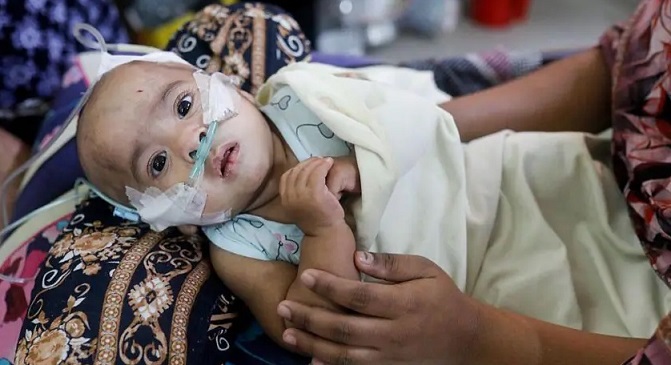
Bangladesh has launched an emergency measles-rubella vaccination drive amid an outbreak that has killed more than 100 children in less than a month, authorities said.
The government, in collaboration with the World Health Organization (WHO), UNICEF and Gavi vaccine alliance, began vaccinating children aged six months to five years in 18 high-risk districts from Sunday, with plans to expand the campaign nationwide in phases from next month.
According to official data, more than 900 confirmed measles cases have been reported among 7,500 suspected infections since March 15 in the country of over 170 million people.
A UNICEF official expressed concern over the surge. “This resurgence highlights critical immunity gaps, particularly among zero-dose and under-vaccinated children, while infections among infants under nine months, who are not yet eligible for routine vaccination, are especially alarming,” said Rana Flowers, the agency’s representative in Bangladesh.
Health experts note that measles, a highly contagious airborne disease, can lead to severe complications, particularly in young children, and requires at least 95% vaccination coverage to prevent transmission.
Responding in Parliament, Health Minister Sardar Mohammed Sakhawat Husain blamed mismanagement by previous administrations, including that of former prime minister Sheikh Hasina and an interim government led by Nobel laureate Muhammad Yunus.
He said poor decisions regarding vaccine stockpiles led to shortages affecting measles and six other immunisation programmes, while recent political upheavals disrupted vaccination efforts.
Officials have urged parents to seek medical care promptly. “They should avoid taking medicine from shopkeepers unnecessarily. If a child has a fever, especially a high fever — 101, 102, 3, 4 (Fahrenheit)… they must take the child to a hospital as soon as possible,” said F A Asma Khan, deputy director of the Infectious Diseases Hospital in Dhaka.
Bangladesh has significantly improved immunisation coverage since launching its national programme in 1979, raising fully vaccinated rates from 2% to 81.6%. However, UNICEF has warned that disparities in coverage persist despite overall progress.