
Zakir Hossain from Dhaka
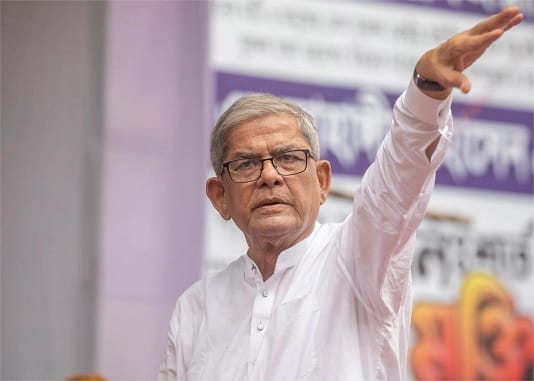
Bangladesh Nationalist Party (BNP) secretary general Mirza Fakhrul Islam Alamgir has said India-Bangladesh relations should move forward beyond Sheikh Hasina, asserting that the former prime minister will “not remain relevant in politics in the long run”.
“She is a factor, but not an insurmountable one,” Alamgir said in an interview with THE WEEK. “Relations between India and Bangladesh can and should move forward beyond her.”
Speaking ahead of national elections, Alamgir expressed confidence in free and fair polls, saying, “People in Bangladesh want an election that is free, fair and participatory. For nearly 15 years, citizens were effectively denied their right to vote.”
He said voter turnout was likely to be strong, particularly among young voters. “There is an entire generation, young people between 18 and 30—who have never truly experienced voting.”
On alliances, Alamgir ruled out any tie-up with Jamaat-e-Islami. “No. We have no agreement with the Jamaat-e-Islami and I do not see the Jamaat being part of a BNP-led national government,” he said. He said a future BNP government would be “consensus-based”, involving parties that stood with the BNP during its anti-authoritarian movement, but not others.
Explaining why the BNP did not align with the student-led National Citizen Party (NCP), Alamgir said, “The NCP demanded a large number of seats, which was not feasible. In Bangladesh, symbols matter a great deal in elections.”
On the Awami League’s absence from the polls, he said, “Ideally, they should have re-emerged with new leadership and a new image, but that did not happen, and now there is no scope for it.”
Alamgir said BNP chairman Tarique Rahman’s return had generated “tremendous momentum”, particularly among youth. He highlighted Rahman’s commitments on women’s empowerment, farmer welfare, employment generation, judicial independence, press freedom and constitutional reform, including limiting the prime minister to two terms.
Addressing India-Bangladesh issues, Alamgir said water-sharing disputes, border killings and trade imbalances needed urgent resolution. “Border killings must stop. This is unacceptable in any civilised society,” he said, adding that dialogue must respect “sovereignty, self-respect and mutual trust”.
On Pakistan, he reiterated Bangladesh’s long-standing demand. “Pakistan must apologise for the 1971 genocide. That remains our position,” he said, while stressing the need for regional cooperation.